Showing posts with label where things come from. Show all posts

Sunday, September 25, 2011

Buzzin' with Bees

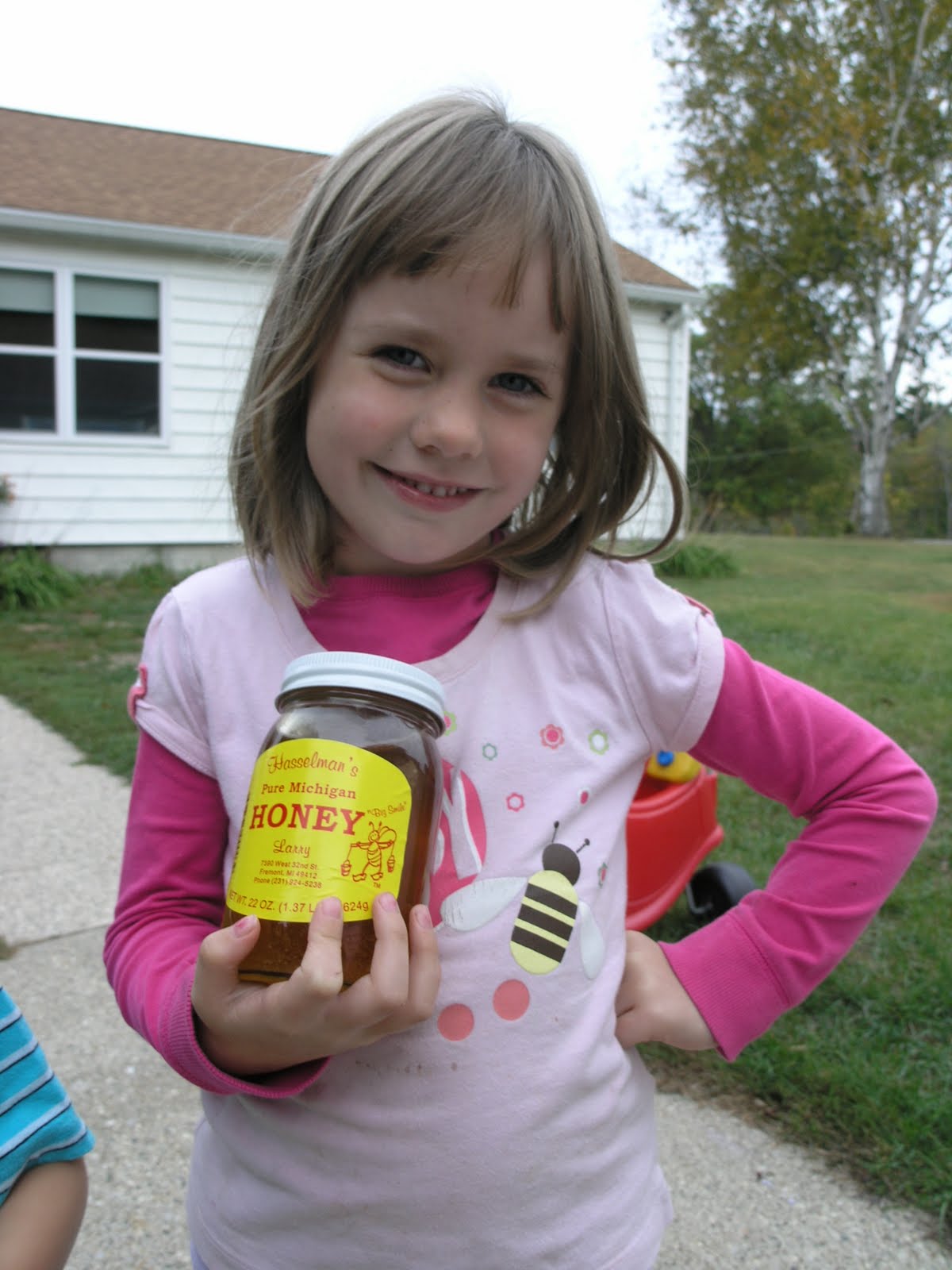
We enjoyed a small study on bees last week, with a fantastic field trip to a local Apiary to learn all about honey bees and honey making!

The moms at my daughter's monthly kindergarten workshop led an awesome craft last Monday, where the kids made these adorable bee jars out of baby food jars and black electric tape. So cute!! Great timing for us.

We made a "Bee Book" (our own homemade Lap book) and filled it with bee facts, vocabulary words and plenty of hexagon shapes for the honeycombs. We learned all about how bees dance to communicate, the pollen baskets on their back legs and why the cells in their hive are shaped like hexagons instead of circles so they don't waste any space.


Field Trip!


Free Bee Links
Bugs and Insect Crafts
Honey Bees
A Bit about Bees
Hexagon Worksheet
Hexagon Pattern

Fun Bee Song :)

Monday, March 7, 2011

Sugar Bush Tour and Maple Syrup Merriment


To further our studies of Where Things Come From this year, a field trip to the Sugar Bush at Blandford Nature Center was perfect for us this month. The tour was amazing, and extremely educational. We learned not only the process in which the tree makes it's sap and how we tap and produce maple syrup, but also the history of how maple syrup was made by Native Americans and by Pioneers. The kids got to take turns drilling a hole to tap a tree, taste maple sugar and maple syrup and see hands-on demonstrations of the process from both historical and modern perspectives.


To prepare and follow-up, I used the adorable story of At Grandpa's Sugar Bush, by Margaret Carney. This beautiful book tells the enchanting tale of tradition and sugaring through the eyes of a young boy helping his Grandpa make maple syrup from their sugar bush forest. It subtly includes other signs of nature and wildlife as the story unfolds and is truly a delight. Here is an educational resource for it: Education World link.
We also used plenty of the wonderful, wonderful free resources from the Homeschool Share website, the time and energy this site saves me is immeasurable and incredible: Maple Syrup Unit Study.
Here's a fun recipe we used (with the fresh syrup we bought at the nature center):
Maple Syrup Milk Shakes
1 pt. vanilla ice cream, softened
1 qt. cold milk
1/2 c. maple syrup
Put ingredients in blender/mixer and serve cold.

You can find more recipes and maple syrup activities at Grandmother Wren.

Sweet Times!

Friday, December 31, 2010

Which came first, the chicken or the egg?

Well, for our house, it was definitely the chickens. We've had our chickens for over three months now, and we just this week got our first eggs laid! Needless to say it was an exciting event over here.
Since we have Bantams, the eggs they lay are quite a bit smaller than regular size chickens, (2 bantams equal approximately 1 regular) which has also made for further science experiments as we measure, compare and contrast our fresh Bantam eggs with store-bought regular eggs.


In honor of our first eggs, we've done some fun chicken activities this week.

Grandma brought over the first two eggs! We got a total of 5 this week (and found out we have a lot more roosters than we thought- uh-oh!)


Borrowed chicken puppets from the library and just-for-fun books like "Henny Penny" and "Big Chickens Go to Town" (such a fun read, especially with the puppets!)


Here are some fun sites we used, Chicken and Hen Theme, also The Little Ren Hen is awesome on the Starfall site, and gave the kids some interactive phonics reading time on the computer.
Worksheets for the kids, my kindergartner reviewed "Ch" and my toddler had fun with Humpty Dumpty activities.


The most fun by far, was the egg experiments we did!! Along with measuring the differences between Bantam eggs and "regular" eggs, we also did a really great density experiment where we sank an egg in plain water, and added salt to the same amount of water to make the egg float! We did predictions for water and water & salt for both kinds of eggs and then tested our hypothesis for each. It was so much fun! We also examined the eggs with a magni-scope to see if we could see the pores on the shells. It was great.


Here are the two sites I used to guide us along for this: Egg Fun and Egg Magic.

And here are a few more pictures, of our coop and our chickens shortly after we got them.


After our egg experiments, my daugther wanted to continue exploring what foods she could float in water, starting with an orange and an apple, lol. Don't forget the lessons don't have to end when the pages do!


For more related adventures we've had in the last few months, see my Where Things Come From post.